Showing posts with label Odinochka. Show all posts

Monday, February 1, 2021

My Tropes on TV Tropes

TV Tropes, for those who don’t know, is a wiki website dedicated to recognizing and cataloguing trends and patterns in fiction known as tropes. A good place to waste time, perhaps, but I’m of the opinion that nothing is a waste of time if you’re enjoying yourself. It’s probably helped my writing a lot, at least on the theory side of things. If I am thinking of using an idea in a story I can look up how other works used it. You could think of a trope kind of like a cliche or a stereotype, but it isn’t exactly the same thing, since it isn’t necessarily overused or negative. It is simply a tool of storytelling. An underlying assumption or an accepted premise which may or may not reflect reality. I discovered TV Tropes in 2009, and have been a member for going on 12 years. It’s amazing to think it’s been that long. It was still the days of MySpace when I started on there. TV Tropes was a very different place back then, and had a very free, laissez-faire approach to what they allowed on the site, allowing users to inject personality and opinion into their posts, as well as apply tropes to real life, bragging “we are not Wikipedia”. They’ve since had to become more strict and sanitized the site, in an attempt to be taken more seriously and be more friendly towards the advertisers. In fact I blame the corporate advertisers for most of the tone changes to the site over the years, which seems to happen to every website that lasts long enough. To be fair, things also changed thanks to people abusing their privileges and posting weird, creepy or offensive stuff, creating the need for regulation. As always, the worst part about wikis are all the other people on them, of course. But, slight feelings of They Changed It Now It Sucks aside, I’ve stuck with the site.


Since 2009 I’ve launched my fair share of tropes, as well as works pages for the site. It’s usually a very shocking experience when I can think of a trope that’s not already on the website somewhere, but it’s happened at least eleven times. And I suppose I should feel proud, or at the very least feel lucky, that none of them have ever been deleted as of yet. They’re solid tropes. I watch a lot of old films and cartoons that I would wager most people under a certain age don’t watch these days, which probably explains why many of these tropes hadn’t been launched yet before I did it. Most TV Tropes users are on the younger side, and are too busy watching anime I guess (to be fair I watch and enjoy anime too, but if you knew nothing about culture except what was on TV Tropes you could be forgiven for thinking that Naruto has far more cultural significance and literary merit than the writings of Shakespeare; but I think the lack of literary snobbery is one of the greatest things about TV Tropes, so don’t get me wrong). They’re mostly comedy or animation tropes of the early to mid-20th century, because yes, I’m a grown man who watches cartoons. Disgraceful, isn’t it? Well, societal norms are mostly bullocks anyway. Except maybe the taboos against murder and cannibalism, those are alright. But I will watch and enjoy whatever I want. So there. 


When you edit a wiki you don’t really get to take credit for anything. It becomes part of the public domain, in a way. But I felt like writing about the pages I started and what inspired them, just so that there was record of it somewhere. Click on the trope titles to be take to the page. This will be roughly in the order they were launched.


I Fell For Hours


This is when a character just keeps falling and falling, maybe into a bottomless pit, usually but not always for comedic effect. You know it’s in play when the character has to take a breath mid-scream, or otherwise starts to wonder when they’ll finally hit the ground. It’s a classical trope that has examples dating back to Greek mythology, but likely emerged in its modern form with Alice’s Adventures in Wonderland, although this example still predates it being used for comedy. That may have started sometime in the Golden Age of Animation. It lends itself to animation because it is something that should be physically impossible; not that there are no live action examples, of course. There are quite a few literary examples as well. This was my first trope, launched when the Super Mario World cartoon was at the apex of its memetic popularity. The most popular episode to parody and meme was “Mama Luigi”. Videos like this one for example were all the rage on YouTube. During the episode, Luigi falls into a chasm, and narrating the story, he says that he “fell for hours”. If I were to do it today I might have come up with a different name, like Overly Long Fall, but it is what it is now. The trope has been up for more than ten years at this point. I just find the concept of falling for that amount of time funny, for some reason. While brainstorming the trope I thought of a lot of different examples of characters falling “for hours”, such as scenes in Bill and Ted’s Bogus Journey, the Bugs Bunny short The Heckling Hare, and more. The other users came up with even more examples, and a trope was born. 


Is There a Doctor in the House?


This was a phrase I heard a lot in the old media I watch a lot of from the 1930s-50s. When someone is injured or faints, inevitably someone shouts for a doctor. This originated in theater, when “house” referred to the theater itself. It’s usually played for comedy; its turn toward being a comedic trope happened with the advent of film, because it was funny to see someone on film address the audience when we all know it’s a recording and not live. The phrase can be altered, with the words “doctor” or “house” replaced by something more plot-relevant. Examples from The Three Stooges, Tom and Jerry and Looney Tunes, along with others, were what prompted me to start it. You barely ever hear this phrase uttered today, but the most recent examples I thought of were from the 1990s, so it was still in the public consciousness in my lifetime. The trope luckily survived the website’s purge of stock phrases that weren’t true tropes. It was tropey enough for them, I guess.


Vot Ocksent?

Someone speaks in an accent but is oblivious to it, leading to hilarious misunderstandings. Gussie Mausheimer from An American Tail was my initial example, as well as Antoine from the Sonic the Hedgehog cartoon, among others. The other users found the bulk of the other examples. There’s really not too much to say about it, but I do find it funny when it turns up.


Gold Tooth


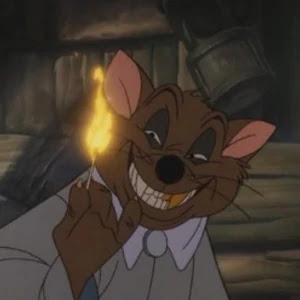
This trope probably would have been launched eventually with or without my involvement, but it didn’t exist yet when I joined the site, so I got the ball rolling. People with gold teeth in fiction are usually shady and villainous, for some reason. Obviously in real life having a gold tooth doesn’t make you a bad person, but if someone in a story has a gold tooth you can bet they’re evil. That’s what this trope is about. Warren T. Rat, again from An American Tail, as well as one of the robbers from Home Alone, were my initial examples.


Verbed Title

This was a pet-peeve trope for me in the late 2000s and early 2010s, when every animated movie had to have a stupid one-word title, often a verb in the past perfect tense. Tangled, Frozen, Hoodwinked, Enchanted. Ugh. And that was just the tip of the iceberg. It was a big thing in television show titles too for around that same period. It advertises to people with short attention spans. It seems to have gradually died off now though. For the most part anyway; it’s probably not going to completely go away, as it does also predate that glut of movies I mentioned, and isn’t exclusive to animated movies either. Scrooged, for example. An awful example of taking a word that isn’t even a verb and putting it in past perfect tense; and not the only example like that. Ooh I can’t stand it, as a Creative Writing major. I started this trope out of spite, I admit.


Construction Zone Calamity 


This trope used to be very widespread, but it’s not used much these days. As the description says, it’s where every sleep walker or escaped baby wanders into. The protagonist will always either be chasing someone through the construction zone (or is the one being chased), or less commonly have gotten a job working at one and still have to go through all the slapstick comedy hijinks. You have to dodge swinging steel beams, deal with malfunctioning elevators, almost fall off the tall steel skeleton of the skyscraper multiple times, all that fun stuff. Every classic cartoon series had a construction zone episode, sometimes more than one. But it wasn’t exclusively an animation trope. The Three Stooges and Laurel and Hardy did it too, as you see above. In fact Harold Lloyd was the likely inventor of this trope, in the silent film Never Weaken. No one has come up with an older example yet. So it was a live action film trope first. But the trope died out in live action long before it died out in animation, which kept it alive for decades longer. It didn’t really survive the fall of the Hollywood studio system in the 1960s when cartoons went to television. Every once in a while someone brings it back in a modern work, but only in reference to the classic uses of it. It’s weird that it died out, since it’s not like there aren’t still tall buildings being constructed. I guess that style of slapstick humor is no longer in fashion, really. Or maybe you just can’t really do anything new with it, since it was so overused from the 1920s to the 1960s.


Dogs Love Fire Hydrants

Images you can hear if you’re of a certain age.

This was just something I noticed they didn’t have yet one day, so I decided to start it myself. I never really got the whole “dogs love fire hydrants” thing. Never seen it happen in real life. Dogs will pee on anything, not just fire hydrants. But I’ve seen it a lot in cartoons. The oldest examples found were from the 1930s, and the oldest example on the page is a Disney cartoon starring Pluto. However it must be older than that since it was already something they could rely on the audience assuming. The examples I grew up knowing were in Ren & Stimpy and Rocko’s Modern Life.

Fur is Clothing


This is another widespread classic cartoon gag, where a cartoon character’s fur is removable and they have little boxers underneath, or alternatively their fur has pockets built in. The Tex Avery short Lonesome Lenny (pictured above) as well as a number of uses in Ren and Stimpy were my initial examples. Others came to me later. The trope still shows up sometimes in modern works, but was more prevalent back when cartoon characters were getting blown up by sticks of dynamite on a regular basis.

Pie Eyed


They had a trope for Black Bead Eyes, but not this, so I started it. It’s the eye-style from 1920s and 30s cartoons, where the pupils are shaped like Pac-Man. Think Betty Boop, early Mickey Mouse, all those old black-and-white cartoons. The name “pie-eyed” is the actual term for these eyes among animators. I researched that prior to starting the trope. The modern examples are interesting too. Most are trying to capture the aesthetic of classic cartoons, but a couple, like the 1980s Super Mario Bros. cartoon, seem to have it for no special reason. The Pac-Man cartoon really missed an opportunity by not using this trope. 

Meet your Early Installment Weirdness 


This is one of my favorite tropes I launched. This is when a show or some other work of fiction does a crossover episode where the characters meet their previous selves, either how they were at the beginning of the series, or the versions of themselves from a previous unrelated series. Early Installment Weirdness was already a trope on its own, so this trope kind of builds off that. I don’t know how old the trope is or who was the first to use it, but it seems relatively recent. I don’t think anyone has brought up a true example from before the 1980s. Except maybe one; The Road to Oz, published in 1909, actually has kind of an example, but it’s more of a nod to a previous illustrator than a full-fledged crossover episode, so it’s only barely this trope. What they call an Ur Example. Meet Your Early Installment Weirdness is a very meta, post-modern kind of trope. And post-modernism was rare if not nonexistent before the mid-20th century. 


Turtles Forever was the example that inspired me to launch this trope; a 2009 Teenage Mutant Ninja Turtles special where the latest incarnation of the Turtles at the time met their 1980s counterparts from another dimension and they had to join forces. I ranted about this briefly on the blog before (it came up in my An American Tail reviews), but let me do a more in-depth rant, because it relates to this trope and how it gets handled sometimes. I hated how they portrayed the 1980s Ninja Turtles, making both them and the villains Shredder and Krang look far stupider and more incompetent than they were in the original show, mere caricatures of their original selves. The 1980s cartoon was mainly humorous while the 2000s cartoon was more serious, but they didn’t have to exaggerate the characters that badly. They tried their hardest to make the 2000s Ninja Turtles look cooler because the special was created by the people who did the 2000s cartoon, obviously. They must have been sick of having their cartoon compared to the original cartoon, and it shows. It smacks of insecurity, and is what happens when someone is forced to homage something they not-so-secretly despise. But I quickly thought of other examples of this trope. The video game Sonic Generations is a more level-headed example, where the modern Sonic teamed up with the classic Sonic and they remade some of the old levels in 3D. Sega has no real reason to despise the 1990s Sonic the Hedgehog (at least the Japanese version, they seem to hate the American incarnations of Sonic like the cartoons), so they treated both versions fairly. Someone else brought up the Garfield example, which provides the perfect image to illustrate the trope in action. Not every example ends up bashing the earlier versions of the characters, but a good many do. I prefer the ones that don’t.


Deliberate VHS Quality 

This music video is not in fact from the 1980s.

My most recent trope, launched a couple years ago now. I started to notice a lot of the music videos I watched from goth and synthwave bands were either filmed on VHS or used a VHS filter, in an effort to capture a nostalgic 1980s aesthetic. Someone familiar with VHS can discern the difference between a filter and the real thing quite easily. It’s a relatively new trope, having only emerged after the advent of the DVD, making it exclusively a 21st century trope. It’s hard to say exactly where and when it started, but I started noticing it around the mid-2010s. They often make it look like the worst, most warped and degraded VHS tape you could ever find (especially some of the filters do this), which is a bit unfair to the medium, but that’s the reputation VHS has these days. The examples quickly piled up, and I had enough material to launch a trope. I’ve almost single-handedly written the whole page, although of course not all of it. My love of collecting VHS tapes was what led me to notice a trend not many people were talking about. 


Conclusion 

I guess it’s been a little while since I launched a new trope, but that’s because by now there are so few that haven’t been catalogued on the site yet. The majority of the ones I launched were within my first year or two on the site, back when there weren’t as many trope pages and launching them was much easier to do. You have to go through a lot more red tape to start a trope than you used to, thanks to people abusing the privilege. Even when I tried to start an index for Armenian Media on the site they made me launch it like a trope through the same process, having to gain approval of enough users and prove it was something the site needed. But who knows. Maybe I will discover another trope soon. In the meantime, I often start new works pages. That is still easy to do, for now, and I’ve done dozens of those. Of late, I’ve been doing the Oz books; before I got to it TV Tropes only had pages for the first three. I did the rest of L. Frank Baum’s books and a few of Thompson’s, and even a couple modern pastiches. In the near future I will start one for my own webcomic too, and in fact I’ve done a page for everything I published, from Odinochka to my fan fiction (and the fact that they still allow fan fiction to be catalogued on their site shows me that they haven’t completely lost their way, not many other wikis would allow that). The site is forever one of my homes on the internet. 

Friday, August 21, 2020

Digital Art - Self portrait and Princess Ozma of Oz

         I have been hard at work as of late on my webcomic, which you'll all get a chance to read once I'm ready to start posting it online somewhere. I have had my art tablet since January, and although I've been drawing via paper and pencil or pen for years, the leap to digital art was kind of like having to relearn how to draw all over again. but I've come a long way.


        Many cartoonists who have their own little Facebook page do cartoon self-portraits of themselves as an avatar. I had been meaning to update my profile picture for a long time. For the longest time it was a picture of me in Armenia, at Noravank monastery specifically. This worked when I set the page up to promote my self-published novel Odinochka in 2016, but I have different artistic goals now and needed to rebrand, as it were. A few months ago I renamed the page to Suren's Art and Prose. And now I have finally drawn my avatar. 


        This is based on my general look from age 15 to 21-ish, when I always wore a leather hat and black hoodie. It's my classic attire. I started varying what I wore in my early 20's but I still dress this way when it's actually cold enough in Florida for me to do so (so like one month out of the year). As I wrote in the Facebook post introducing it, I feel weird drawing myself. I often feel like I'm the opposite of a narcissist, I don't always like seeing my own reflection and I dislike hearing my own voice in a recording. But I must have it in me somewhere I suppose. Even though I don't really look this young anymore in real life, this is how I feel inside.  I'll always see myself as how I looked as a teen when I picture myself, no matter how I age.  


        Anyway, I had another art piece I wanted to debut today. Fans of the Oz series would know that today is the birthday of Princess Ozma, the ruler of Oz. In an effort to practice coloring and shading I took a John R. Neill illustration and did a colored version. It may have been a trace job (which I feel is best to admit upfront) but it was still no easy feat. I think I became a better artist for having done it. So here is my birthday gift to the ruler of Oz. Maybe she'll let me live in Oz now...


        Here is our stunning fairy princess, standing in front of the (book-accurate) Emerald City. I actually don't plan on doing too much shading in my webcomic, just as an artistic choice, but I felt that I should at least know how to do it. And I can now if I have to. The illustration I used in the pencil layer was my favorite Ozma picture by John R. Neill:


            So you see the shoulders and chest were all me, at least. And I picked the colors out myself. It took me about three days on and off to do the whole thing, using lots of layering. 

Saturday, January 18, 2020

Ten Mistakes Self-Publishers Make


            I recently joined the Space Coast Writer’s Guild of Brevard County, Florida. It’s been a nice association so far. They do yearly short story anthologies, provide members with connections for proofreading and editing, host book-signing events (I’ll need to have at least more than one book published before I do one), and have guest speakers do an educational presentation at every meeting. Before joining in November it had been ages since I spoke with other writers. Not since graduating with my Master’s degree. At today’s meeting, the topic of discussion was ten common mistakes self-publishers make. I thought to myself “oh goody, I get to beat myself up all over again.” But actually, I think I learned some valuable information from the meeting, which I’d like to discuss here, for whoever wants to read about it, and probably for myself at a later date when I go back and read this. Let me get this obligatory thought out of the way: it sure would have been GREAT to have learned this in Graduate School. I should have joined a writer’s guild instead of getting a useless degree in Creative Writing. I would have learned actual life skills, and it would have been a lot cheaper.

            If you asked me what the biggest pitfall to avoid while self-publishing was before this meeting, I’d have said it all boils down to “don’t be poor”. I’d still stand by that to a degree, but there were things I could have done for Odinochka: Armenian Tales from the Gulag that wouldn’t have had to cost me extra money. I want to go through the list and see what I should have done differently with my book. The speaker at today’s meeting was Jacquelyn Lynn. I hope she wouldn’t mind my commentating on her list she gave us. She runs CreateTeachInspire.com. If she has issue with me doing this, I’ll gladly take this blog post down. Anyway:

Mistake 1: Ineffective title. Oh boy. Odinochka: Armenian Tales from the Gulag. Really rolls of the tongue, don't it? What was I thinking?! I want to bang my head on the wall for picking this title. It’s stuff I didn’t think about at the time. No one guided me through self-publishing. Especially not in Graduate School. But I can write a damn good twenty-five page term paper, so there’s that. I’m sure I’ll get rich with that skill. Ahem, sorry. I should have picked a title that was in English, and said something about what the book was about. I know that, in hindsight. I learned it the hard way.

Mistake 2: Poor cover design. 

Well what do you think? I did the best with what I had in this regard. I still like my cover. The title is legible, it doesn’t clash with the image. The painting is symbolic and you'll only really get it after you read the book, but I dunno, I still like it. I don’t think that was my book’s biggest problem. I've seen much worse covers on self-published books.

Mistake 3: Poor interior design. 

Umm, now that you mention it...

Well, okay, I could have done better. I should have had the page numbers at the top of the page. I don’t know why I didn’t do that. And the footers are uneven from page to page too. They're higher up on the right pages than the left pages. Formatting in Microsoft Word is such a bitch, if you’ll pardon my language. You'd think something as simple as adding page numbers to your document would be easy. It isn't. I tried. This was as good as I could get it. I remember calling Microsoft customer service for help and they were basically like "Did the online tutorials work? No? Well your version of MS Word is over six months old so screw you". I was lucky to even get it this good. I learned that you'd better have the page number situation on your document figured out before you really start writing a novel because going back and adding them later is near-impossible. I like the Palatino Linotype font, so I still stand by that choice. I think the spacing and font size are fine. But the formatting needs work, for sure.

Mistake 4: Low Quality Graphics. I didn’t dare risk using any kind of illustrations or graphics in Odinochka. I don’t think the book needed it anyway. But it’s something to keep in mind for my next books. It'd be nice to at least have maps in them or something.

Mistake 5: Using copyrighted material without permission. I might be doing that right now with this blog. Sorry if I am. Maybe it falls under Fair Use because I’m commentating on it? Hopefully. Well, this didn’t really apply to Odinochka. It may have been partly inspired by my grandfather’s memoir, so there might be that, but he won’t sue me. My next book is based on the Oz series by L. Frank Baum and I’m being extra careful only to use material from the public domain books. No ruby slippers, no green Wicked Witch of the West, etc. I'll still credit Baum, Ruth Plumly Thompson and Jack Snow even though I don't technically have to, out of courtesy for their work which inspired me. I’ve written fan fiction before based on various animated films, but I’m not profiting off that, so it should be alright. Though fanfiction.net did make me edit my stories for copyrighted content at one point. Try figuring that out. That’s another blog for another time. Anyway, as much as copyright is just a creative leash that mainly only protects the interests of mega-corporations at this point, it’s a law we must abide by.

Mistake 6: Poor editing. I did my best. I made this book on a shoestring budget. It benefited from being reviewed by my professors and fellow students at Graduate School. It was my Master’s Thesis. But yeah, Rule#1 of self-publishing: don’t be poor. Editors are expensive, and there’s no guarantee you’re going to make that money back. That’s why I’m going to have to play the traditional publishing world’s lottery from now on.

Mistake 7: Sloppy Proofreading. I don’t think my book had this problem. I even ordered a proof copy and went over it with a fine-tooth comb. This kind of goes with editing. I’ve even seen traditionally published books with spelling and grammar mistakes, so this can happen to anyone.

Mistake 8: Poor book description. 

What do you think? I thought I did a good job for what the story was. The story isn’t very marketable to begin with. The books I likened it to are obscure themselves. I wasn't able to say "If you loved Harry Potter or Game of Thrones, you're going to love this!" The more honest marketing quote would probably be “Need a good cry? Want to lose your faith in humanity? Read Odinochka!” I’ll be writing more marketable books from now on, so this will get easier. To write a really good, marketable description with all the right SEO and keywords, I ought to hire someone. “Don’t be poor” rears its ugly head again.

Mistake 9: Trusting friends for feedback. Your friends and family won’t be neutral, even if they try to be. I already knew that. My feedback for Odinochka came from brutally honest classmates and professors. The same people who boiled me alive when I tried to workshop my fantasy novel seemed to love this book. I’m going to have to find people to workshop my coming novels with. Comment here if you want to be one of them!

Mistake 10: Failing to create a plan. I had a plan. It didn’t work, but I had one. I knew it wasn’t going to be a best-seller, obviously, but I really didn’t realize what a drop in the ocean my book was going to be. My target audience was Armenians. Didn’t really catch on with them. I needed money to be able to market it. And I didn't have money. Still don't. I went into it not knowing much. My plan up until now was to write a much more marketable second novel and hopefully more people would buy this novel too out of curiosity. 

            You might think all of this discouraged me. But you know what? I feel more resolve now. I told the speaker at the meeting today that I have already self-published and I have some regrets. I asked her if there’s any recourse, you know, if I want to change the title or hire a better editor for it. She explained that I can “unpublish” it, as in take it off the market, rename it and re-edit it, and then republish it under a new ISBN number. It’s not so set in stone. One day when I have the money that’s what I’ll do. Come up with a better title, hire a professional editor. It’s kind of low on my priorities right now, but one day I’ll fix that old book and maybe it’ll be more marketable. It deserves better than I was able to give it back in 2016. I’ll remake it when my ship comes in. Whenever that’s going to happen. Anyway, you could technically buy it now and have a rare original copy before I take it off the market and revise it. Might be worth big bucks once I'm rich and famous. You know, I'm just saying...

Genius marketing, eh?

Thursday, December 19, 2019

Reality Satiety: A Rebuttal


Introduction

The following essay is something I wrote almost exactly eight years ago for a nonfiction writing class when I was going for my Creative Writing Master’s degree at Fresno State, as somewhat of a rebuttal to David Shield’s book Reality Hunger: A Manifesto, as well as a critique of the Creative Writing program and the snobbery that exists in the literary world. It’s a painful read in hindsight. Even back then, a part of me knew that this writing program wasn’t for me. It was for rich literary fiction writers. They didn’t teach me a thing about how to get published or how to survive in the real world as a writer. But I pushed on in hopes that the degree would help me get my foot in the door with literary agents and publishers, or help me get a teaching job. It has done neither. All it’s gotten me is $80,000 in student loan debt. The thesis I wrote wasn't being picked up by a literary agent when I sent queries out so I self published it without knowing how to market it. Would've been nice if they taught us about that. It was a colossal waste of time and money. I wouldn’t have any easier of a time getting published with this degree now than someone without a High School diploma. I would even go as far to say it was all a big scam. “Should’ve gone to trade school”, the conservative victim-blamers all say these days to people like me, millennials who fell for the scam that is higher education in the United States. Nobody was saying that ten years ago. I grew up being told college was a guarantee to success. Instead I can only get corporate wage slave jobs that you don’t even need a High School diploma to get because I lack enough teaching experience. And they sit and wonder why there’s a teacher shortage. What I should have done instead during my first semester is dropped out, gone home to lick my wounds, and then applied for Birthright Armenia and done an internship in Armenia, as I eventually would do in 2015. And maybe never come back, just get a job in Armenia and live there. I know in this alternate universe I never would have met my wife though, sadly. It’s just a thought. Shoulda, woulda, coulda. Taking classes in the Fresno State Armenian Studies program was fun, and I learned a lot, but altogether, it wasn’t worth it getting my Graduate degree. At least I was able to stop my wife from making the same mistake after she witnessed what happened with me after graduation. She was going for a degree, but they were not helping her get a job. The career center at her college literally told her to look on Craigslist for jobs that fit her degree in Digital Forensics. There are people who get paid to sit on their ass in an office all day and tell students to go to Craigslist. College is nothing but a scam. Anyway, here’s the essay I wrote eight years ago, presented here in its entirety.    


Suren Oganessian
English 245
Professor Church
December 13, 2011
                                                
Reality Satiety: A Rebuttal

            “Why should a man be scorned if, finding himself in prison, he tries to get out and go home? Or if, when he cannot do so, he thinks and talks about other topics than jailers and prison-walls?" - J.R.R. Tolkien

            When I started the MFA Creative Writing program at Fresno State in August 2011, I’d been so optimistic, so full of dreams and aspirations. It will be just like at CSU Monterey Bay where I did my Bachelor’s degree, I thought. Except this time, without all the pointless Latino Culture classes. Like in the creative writing classes I took at CSU Monterey Bay, all my professors will marvel at my writing, and all the other students will be jealous. I’ll be their star student, and I’ll make connections with insiders in the publishing business and finally hit it big.
            I was a big fish in a small pond back in Monterey, I’ve come to realize.
            You see, I consider myself, first and foremost, a fantasy author. Speculative fiction is my specialty. It isn’t the only thing I can write, by any means, but it is my favorite. But surely, entering a program called creative writing, I thought even if some people aren’t into that genre, they’ll respect my writing for what it is and give me some good feedback on it, maybe even finding themselves liking it if I’m lucky. Everyone has their own preferences; some people write romantic stories, some people prefer stories closer to everyday life, some people write non-fiction and some people write poetry. But it’s all basically creative writing. We’re all writers, so we should all have a similar sense of camaraderie, right? That’s how it worked back at CSU Monterey Bay after all.
            I was so young, so naΓ―ve, so full of dreams.
            But no, instead I am now the heathen of the MFA program. An outcast, scorned for not writing something you could force a 10th grader to do a five-paragraph essay about. “Eww, genre fiction!” most of my workshop class thought after I workshopped the first chapter of The Epic of Ararat, my historical fantasy novel that takes place in Urartu (ancient Armenia) and concerns three princes who must try to save the kingdom from the vengeful dragon spirit that inhabits a mask that the king wears. A few in the class never even bothered to read or critique it, because it was too far out of the little reality bubble that they cannot allow their minds to venture from. I was informed (very belatedly I might add) that “literary fiction” was what I was supposed to be writing in this program. Apparently, my story didn’t fit into the very reality-grounded fiction that this writing program specializes in. In this creative writing fiction program, you could only be as creative as your professors allow you to be.
            Before coming to Fresno State I had never heard of there being a distinction between “literary” and “genre” fiction. I was blissfully unaware that such snobbery existed. Nobody had ever told me I couldn’t workshop fantasy. Nobody had ever told me that I could only write one style of fiction in this program. What was more perplexing was that not even those who were also on their first semester had any confusion about what we were supposed to be writing. They took to it like they’d been in the program for years. I was the only idiot. What makes fantasy so terrible? Are sonnets superior to haiku? Are odes a more valid art form than a ghazal? I guess I never took the class where we were supposed to learn that true art doesn’t include dragons. No, true art is about white, middle-class suburbanites struggling with some kind of emotional turmoil. If it sounds like I’m making hasty generalizations, I’m only mirroring the generalizations people have said about genre fiction. Don’t get me wrong, I respect literary fiction, as well as every form of writing, even the ones that aren’t exactly my cup of tea. I believe that they all have a right to exist, that not one form is inherently better than another. It’s about the way we express ourselves best. But it becomes increasingly difficult to respect those who don’t respect me back.
            However, since by the time this was revealed to me I’d already invested so much in being in this program (up to and including getting my aunt to cover my tuition until my late-arriving financial aid came in, narrowly avoiding being kicked out of school and evicted from my dorm), I was going to have to play by their rules. There was no turning back at that point. Besides, being in a creative writing MFA program had been my goal since I started college. So, I gave myself a crash course on how literary fiction differed from genre fiction. Most of what I found on the internet was written by other genre writers, heaving deep sighs and lamenting over being shunned by literary writers. I’m still having a little trouble figuring out how to distinguish between “literary” and “genre”, beyond understanding that genre fiction tends to be more fantastical while literary fiction is more reality-based. But then, how to account for books like George Orwell’s 1984 or the writings of Kurt Vonnegut and Jorge Luis Borges being classified as literary? Such enigmas! I suppose if you can see it being taught in school, it’s literary. If it’s more entertaining than thought-provoking, it’s genre fiction. But I’m tempted to think that Orwell and company are just well-written genre fiction that professors really like and give a free pass to, and don’t want to admit it is science fiction or fantasy.
             My problem with writing literary fiction is that reality and I never quite got along. The way I saw it before, if I wanted to write something realistic, I’d be a nonfiction writer. I thought fiction was meant to let your imagination run wild, to escape this horrible world, not immerse yourself in it further. But that seems to be what literary fiction is all about, at least in my understanding. And I didn’t know if I were capable of writing like that, when I was told I would have to. On top of almost being kicked out of school for late payments just shortly before this came to light, I nearly had a nervous breakdown over everything, along with a serious lapse of confidence in myself as a writer. Was my being admitted into this program a fluke? Did I really belong here? Am I a bad writer? I was so used to being praised as an undergrad. What if that was all dumb luck and I was really a failure?
            I did have one ace up my sleeve; the story that had gotten me accepted into the program in the first place. It was the tale of little Vartan Manukyan, an Armenian orphan who in 1915 had been living in an orphanage in the city of Van before all hell broke loose and the Turks besieged the city. I thought maybe this piece was realistic enough for the literary fiction writers in my workshop class to digest and maybe even enjoy. And so, rather reluctantly, I returned to this tragic tale for my next workshop piece, creating a new installment. I was out of options, and my next workshop was a mere few weeks later. I didn’t have time for self-doubt and emotional crises, nor to work out why my fantasy novel wasn’t good enough.
            The story itself started out as something I’d written my senior year as an undergrad to accompany my capstone project on the history of Armenian/Turkish relations. Being a Human Communications major with a concentration in creative writing, I was to do a 25-page report that pertained to my topic, along with 30 pages of fiction and two poems to accompany it. I developed it using a patchwork of different sources, ranging from eyewitness testimonials of Armenians living in Van at that time to the memoirs of one Dr. Ussher, an American missionary stationed in the city at the time. Some characters in the story (Dr. Ussher, Herr Sporri the orphanage director, and a few others) were real people. Vartan himself may as well have been real too, consisting of the combined stories of Armenian orphans and some of my own personality injected in (he’s as much of an escapist as I am, and really who can blame him). He took on a life of his own. The story needed to be real, after all I couldn’t have some Turkish genocide denier read it, snicker to himself and say “Heh, so the fantasy writer is writing another piece of speculative fiction”.
            But after writing 30 pages of it and turning it in with my capstone project, getting my A and then my bachelor’s degree, I’d had my fill of reality. I may be good at writing realistically about the genocide, at least so I’m told, but that doesn’t mean it’s what I enjoy writing about. The topic haunts me, depresses me, sickens me, and even gives me nightmares sometimes. In order to write about it accurately I need to immerse myself in it completely. I need to live it. I need to vividly imagine and feel everything my characters go through, to close my eyes and be in their world. It’s no wonder I’m an escapist fantasy writer. I hate reality. When reality isn’t boring, it’s painful. Reality is genocides that go unpunished. In his book, Reality Hunger: A Manifesto, David Shields argues that we as Americans crave more reality. I must be an exception. Give me the plot. Give me the characters. Get me out of here. As far as reality hunger goes, I’m full. Besides if reality tasted like anything, it would either be tasteless, or taste like the disgusting Robutussin medicine I had to take when I was sick as a kid.
            But as it happened, Vartan’s story was just about the right length to send along with my application to Graduate School. So, when I was ready to complete my application, I sent it. After graduating at CSU Monterey Bay, I decided to turn my attention to The Epic of Ararat. Now here was the story I was born to write. I used my unfortunately boring year off from school (the economy made it hard for me to find a job, and the letters of recommendation for my applications didn’t come in on time to apply for Fall 2010, causing me to have to wait another year) to finally work on the novel I’d wanted to write since High School. Nearly every Armenian writer writes about the genocide; it is overdone in Armenian writing circles, even if not many outside of Armenian writing circles know about it. But what no one has ever done before is write a fantasy story that takes place in Urartu, back in the good old days, before Armenia became a hot commodity for every empire builder in the Eastern hemisphere. And no, setting wasn’t everything (a common complaint about fantasy). There are deeper meanings and messages, hidden between the lines. I didn’t want the villain to just be evil for evil’s sake. There had to be something behind it. I borrowed heavily from Carl Jung’s “anatomy of the self” when conceptualizing this villain, and researched heavily to make everything in the novel historically accurate; something a snobby literary fiction writer probably wouldn’t expect from a lowly writer of trashy genre fiction. After all, fantasy isn’t supposed to make you think, right?
            I think that this story has enough deep concepts and of course angst from the main characters (interpersonal family relationship angst, even) to compete with any piece of literary fiction. But no, it has dragons, it must be trash. No way is it on the same intellectual level as what everyone else in the program is writing. I’m almost tempted to write the same exact story only set it in the suburbs, give all the characters American names and take out the fantastic elements, and workshop it just to see if they’ll praise the same exact story when it’s written to fit inside their tiny reality bubbles. If you boil the story down and make it just about three brothers finally breaking away from their abusive father it probably could be literary. But it would also be boring. Even though I don’t especially like having to write about the Armenian genocide for the sake of being considered literary, at least that topic is interesting, if also painful. I just don’t write stories about modern, everyday life. So, if you’re wondering why I don’t just write something else ’literary’ if I dislike writing about the genocide, that’s why.
             I never wanted to be the next John Steinbeck or Ernest Hemmingway. I wanted to be the next J.R.R. Tolkien, or C.S. Lewis. Or better yet, the next Homer.  All of my author role models except the latter are frowned upon in literary circles (and we’re not supposed to write like Homer anymore, just write essays about Homer). But let’s look at how much more money the writers I like make. I’m sure J.K. Rowling never loses any sleep over the way literary fiction writers roll their eyes and scoff at her work. If they do hurt her feelings, she has plenty of money lying around her mansion to use as Kleenex. But doesn’t the fact that genre writers make more money go to show something? If literary fiction were really any better, why is it that more people are reading genre fiction? Why are J.K. Rowling and Stephen King household names when even the most acclaimed novels of modern literary writers seem to almost be underground cult classics celebrated mostly only by those in university English programs? David Shields (himself no fan of any kind of fiction, literary or otherwise) would argue that the publishing industry and its status quo of ‘the formulaic novel’ is mostly to blame, that people would actually rather read things closer to reality, and that the novel is a dying art. But I do not think that I am alone in my reality satiety, and I think the amount of money genre writers make speaks for itself. The ‘status quo’ wouldn’t be a status quo if people didn’t keep buying novels, and ones that don’t deal heavily in reality at that.
            My goal for The Epic of Ararat isn’t just money though. Okay, I don’t want to be broke of course, but I didn’t become a writer for money. My true goal is to write something that will both entertain and inform, something that will make people think, and maybe even spread awareness about ancient Armenia because no one seems to talk about it, not even the Armenians themselves. I’ll admit that story still needs a lot of work before it can be in the same league as other successful fantasy stories. Unfortunately, I will have to do this work without the help of my fellow students, because I’m not allowed to workshop it nor use it as my thesis. But actually, I’ve found that being in the creative writing program has helped me with my story anyway, because, surprise-surprise, fantasy really isn’t that different from literary fiction in a lot of basic, fundamental ways. There’s description, character development, themes and recurring motifs. I can take the critiques leveled at other stories in my workshop classes and apply them to my own work. My classes in the creative writing program have been beneficial to my novel in spite of everything. If I am able to do that, why was it impossible for some of them to critique or even read my work? “I don’t read genre” and “It’s just too different” are the only answers I was given, and I was left to figure out for myself what the difference was. If you have to ask about the difference between “genre” and “literary” fiction, you’ll never know.
            I personally came to the conclusion that the differences are only superficial. If you look past the differences, at their very core, they’re all the same. You can have well-written genre fiction just like you can have poorly-written literary fiction. From what I’ve seen literary fiction has its own clichΓ©s and tropes just like genre fiction does (the single parent, the closeted homosexual, characters coming to some revelation about themselves, etc.). But both forms can transcend them, they can both be about anything, whether it be about aliens or teen angst. I don’t see why fiction writers have to be so divided, why everything in fiction has to be pigeonholed into genres and why people close-mindedly act like one form is inherently superior to all the others. I long for the camaraderie I felt at CSU Monterey Bay, where all fictional pieces were workshopped equally, and it didn’t matter if your story were about dealing with a step-dad’s alcohol abuse problems or about dealing with a zombie apocalypse. It was probably only allowed because it was such a small program at such a small college, I realize now. Now when fiction as a whole is attacked by the likes of David Shields, I don’t even care anymore because my favorite genre is at the bottom rung of the fiction ladder anyway, and gets attacked by everybody above it. It’s nice to see the ones on top take some heat for once. I don’t want to feel that way, but I’ve been driven to it by the lack of respect speculative fiction is given.
            So after being sent into a self-esteem lapse from the largely negative review of The Epic of Ararat in my Workshop class, and striving to discover if I were even capable of writing anything literary (whatever that means), it turned out that Vartan, the real orchestrator behind my getting admitted into a program that only allows me to write literary fiction, was going to save me again. As it turns out, though his story was a historical fiction piece, it was also literary fiction, and possibly the only literary piece I’d ever written. After writing and workshopping an entirely new piece starring Vartan, about a real-life field trip the orphans of Van took to the real-life church of Akhtamar, it seemed to the class that I’d finally found my voice as a literary fiction writer. Besides some people calling me out on nonexistent historical inaccuracies that none of them had bothered to look up themselves, they were pleased with it. Even if the time and setting was still a little beyond the scope of many of their comfort zones.
            Of course, the point of Workshop classes isn’t supposed to be to write something your classmates and teachers will approve of, but to get some feedback on something you’ve already written. But I needed to impress them, and I needed to be told it was literary so I could know if I belonged here or not, and to know if I were really a good writer or if I were just kidding myself with delusions of grandeur before coming here. I silently smiled and nodded at being told it was “so much better than your first piece”; at that point I was grateful for any compliments, even if some of them did rely on taking a jab at my fantasy novel. I’ve had to become J.R.R. Tolkien’s hypothetical prisoner in his quote, writing about jailers and prison walls, to fit in and conform. Now I’m fairly certain Vartan’s complete story will become a novel, and it will likely be my thesis. Who knows, maybe I’ll even publish it, and then confuse and irritate my publishers by doing The Epic of Ararat next and going back to being a genre writer. Vartan chose me to write his story, and I’ll have to delve into the darkest aspects of reality to do it. If it is possible to hunger for reality, I wonder what over-eating will do.

Sunday, December 1, 2019

The Making of Odinochka


                        My New Decade’s Resolution at the beginning of 2010 was that by 2020, I would publish my first book. Later in 2010, I wrote a short story to go along with my Capstone project, which was my final project before receiving my Bachelor’s degree in Human Communications (essentially an English major but with philosophy thrown in). The topic of my Capstone project was the Armenian genocide, so along with a term paper on the subject I included a short fiction piece that would tie in with the theme. This story took place in 1915, and focused on two orphan boys and their experiences during the Van resistance, during which the besieged Armenian population of the city of Van stood their ground against the Ottoman Turkish army, holding out until the invading Russian army arrived and saved them. The story went over quite well with my instructors, and I got a good grade on it.

            I started in Fresno State’s Creative Writing graduate program in 2011, having used this short story as a writing sample to get accepted. What I didn’t know about this program before I enrolled, but was apparently common knowledge to everyone else, was that in these types of programs genre fiction is frowned upon. Quite heavily, in fact. They only wanted us writing reality-based, slice-of-life type stories dealing with real world issues. In short, literary fiction. “Creative” Writing, indeed. So you can imagine the absolute hazing I got when I tried to workshop my fantasy novel in class. No one had a single good thing to say about it, and afterward the teacher pulled me aside and asked me if I really belonged in their program.

I didn’t move to Fresno and take out a student loan for nothing, so it was time for a change of tactics. I dusted off that short story from my Capstone project and decided to expand it into a novel as my Master’s thesis. If I was going to have to write literary fiction, it would have to at least be historical literary fiction so it wouldn’t bore me to death to write it. This all seemed like the right decision at the time. I do think getting my MFA in Creative Writing did make me a better writer; but other than that, the degree hasn’t gotten me a job, and worst of all they never taught me a single thing about publishing (why teach basic life skills writers need in the real world when you can make us write 20 page term papers about the works of William Faulkner?), so I feel like I went $80,000 in the hole for nothing and that it was basically all a scam. I probably should have dropped out then and there and done an internship in Armenia instead. Hindsight is 20/20 and all that. But I digress.

              I spent the next three years working on the novel, workshopping chapters in class, gaining valuable feedback from my peers and instructors. I read firsthand accounts from people who lived through the Van resistance, and researched everything so that it would be as historically accurate as I could make it. I drew inspiration from my own grandfather’s autobiography. My grandfather was a survivor of the Soviet gulag camps (that’s definitely another blog entry for another time). I decided my main character, Vartan Manukyan, would be telling the story of his youth surviving the Armenian genocide from a solitary confinement cell in a gulag in Siberia. The novel would be called Odinochka: Armenian Tales from the Gulag. “Odinochka” is the Russian word for the solitary confinement cell my character was in, and it also can mean alone or lonely, so I thought it was a good title. It all gradually came together, and after I presented my thesis the same teacher who asked if I belonged in the program would later confide in me that she thought my thesis was one of the best that year, in part because it was so different from what anybody else was writing.

            I graduated, moved from California to Florida with my then-fiancΓ©, soon after I did my internship in Armenia, and once all that was done, I felt it was time to have a look at Odinochka again with fresh eyes, have it edited, and try to get it published. I knew I wanted to write genre fiction, but I figured I could get my serious book out first, and maybe get my foot in the door with publishers. But it was a hard sell to literary agents. Too foreign, too hard to market. I could have kept submitting to different agents until someone said yes, but I took a seminar on self-publishing and got to thinking that would be the best way to get this book out. I started my own publishing company, Vishapakar Publishing, just to publish this one book. My wife and I both did the front cover (which I think turned out pretty good, I still have the painting hanging in my bedroom). I designed everything, and made an ebook edition too. I published it through Lulu. Within about four months of deciding to self-publish, it was released in May 2016. I’d met my Decade Resolution, technically.

            But there were things I failed to consider. Looking back now, I wish I had gone with a title easier for Americans to say. People have a difficult enough time with my name after all. I had a local book store refuse to carry it because both the title and my name were too foreign-sounding and they didn’t think it would sell. I also learned that if you’re going to self-publish, you’d better have money for marketing. I did try to market. I advertised on Facebook, I added it to Goodreads, I got people to leave reviews on Amazon, I even made a TV Tropes page for it…but the task ultimately proved too overwhelming for someone with as limited funds as I had. Most of the people who bought copies were family or friends, and since 2016 I sell maybe about two copies a year. I still hope it will sell better once I have other books out. For now, it’s just something to put on my resume, that I published a book once. I think unless I somehow get rich (if that ever happens), I’m much better off sticking to traditional publishing, where they handle all of the editing and marketing costs. The trick is actually getting a literary agent interested.

            Anyway, if you’re curious to read it, it is still up for sale on Lulu. If you prefer Amazon, it’s available there too.
Lulu
Amazon